
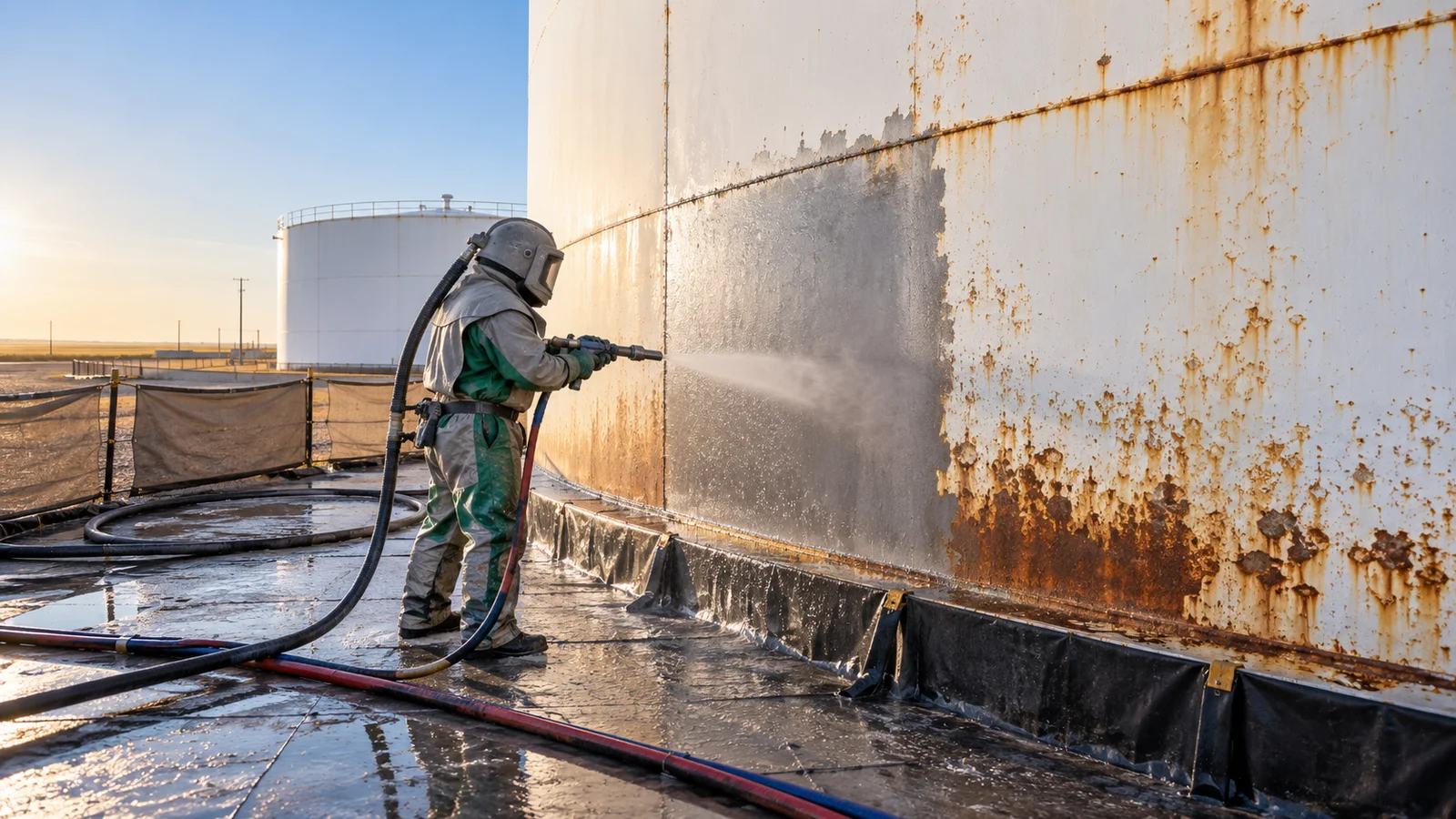
The outside of a steel storage tank can look like one large painted surface, but coating failure rarely behaves uniformly. Rust may begin at the shell-to-bottom edge, roof runoff paths, welds, nozzles, ladders, supports, insulation terminations, or places where water and debris collect. Sun, condensation, process exposure, mechanical damage, and repeated temperature changes can create different conditions on the same tank.
Effective storage tank exterior surface preparation begins by defining those conditions and the coating system that must follow. Removing visible rust is only one part of the work. The owner also needs a plan for tank status, hazardous materials, access, containment, steel repairs, inspection, weather, and the handoff to primer.
This guide is limited to exterior, openly accessible surfaces. Interior tank work can involve confined-space entry, atmospheric hazards, stored-product residue, isolation, ventilation, rescue, and specialized lining requirements. It should be treated as a separate scope led by qualified parties.
Identify the Tank, Service, and Exterior Scope
Start with the asset rather than the blasting method. “Storage tank” can describe a small shop tank, a bolted water tank, a welded process vessel, an oilfield production tank, a municipal reservoir, or one tank inside a larger terminal. Each can have a different substrate, coating, operating condition, and consequence of damage.
Record the information that affects preparation:
- tank use, current contents, operating status, and responsible facility contact;
- welded, bolted, riveted, insulated, or jacketed construction;
- shell diameter and height, roof style, appurtenances, and foundation;
- carbon steel, galvanized steel, aluminum, or mixed exterior materials;
- coating age, known products, previous repairs, and number of layers;
- nozzles, vents, gauges, valves, seals, grounding, and sensitive components;
- included and excluded surfaces;
- planned primer and finish-coat system;
- shutdown, inspection, and return-to-service milestones.
Define whether the objective is complete coating removal, selective preparation of failed areas, preparation for an overcoat, or exposure of suspect steel for inspection. These outcomes require different production rates, controls, and acceptance criteria. A request to “blast the tank” does not tell a contractor what finish the coating team needs.
AMPP’s overview of storage-tank corrosion protection explains that coating performance depends on service conditions, substrate preparation, application, cure, inspection, and maintenance—not coating chemistry alone.
Keep Exterior Preparation Separate From Tank Entry
Exterior coating work should not drift into opening or entering a tank without a new scope and the facility’s formal controls. An apparently empty tank can still contain flammable, toxic, oxygen-deficient, or otherwise hazardous conditions.
OSHA’s storage-tank safety resources identify fire, explosion, toxic exposure, and oxygen deficiency among potential hazards associated with aboveground tanks containing petroleum or other hazardous liquids. Its guidance emphasizes preplanning, isolation, atmospheric testing, employer-contractor coordination, permits, and rescue requirements where entry applies.
The owner or controlling contractor should identify the tank’s status, isolate applicable equipment and process connections, establish restricted areas, and release the exterior work zone under site procedures. Surface-preparation crews should not assume that a tank is safe because it is labeled empty or because the work is outside. Vents, openings, product lines, electrical classification, nearby hot work, and facility operations can all affect an exterior plan.
Map Coating Failure Before Choosing a Method
Photograph the full circumference and roof areas included in the scope, then capture close-ups with elevation or clock-position labels. A condition map makes it easier to compare coating failure, access, and repair needs instead of treating the tank as a single square-foot quantity.
Look closely at:
- the lower shell, chime, base plates, anchors, and foundation interface;
- horizontal welds, vertical seams, bolted joints, and lap details;
- roof edges, drainage paths, platforms, ladders, handrails, and supports;
- nozzles, manways, reinforcement plates, and penetrations;
- areas below vents or overflow points;
- impact damage, previous patches, and coating transitions;
- surfaces near soil, gravel, vegetation, standing water, or chemical exposure.
Record coating condition separately from steel condition. Preparation can expose pitting, section loss, cracked welds, deformation, leaking seams, or deterioration hidden under paint. It does not determine whether the tank is fit for service. Integrity decisions and structural repairs belong with the owner, tank inspector, engineer, manufacturer, or other qualified professional.
Test Existing Coatings and Contamination
Coating color is not a reliable material identification. Older systems may contain lead, chromium, or other regulated constituents, while tank exteriors may carry oil, salts, process residue, biological growth, or airborne facility contamination. Representative testing can change the containment, worker protection, hygiene, waste, and disposal plan.
OSHA’s abrasive-blasting fact sheet notes that hazards may come from the abrasive as well as the coating and substrate being disturbed. Wet abrasive blasting can reduce airborne dust compared with dry blasting, but it does not make hazardous coating debris harmless.
Clean compatible oil, grease, dirt, and process residue before abrasive preparation. Blasting over contamination can spread it or embed it in the surface. Coordinate cleaning agents and rinse requirements with the proposed coating system, protect tank instruments and openings, and collect wash water as the project requires.
Approve a Representative Exterior Test Area
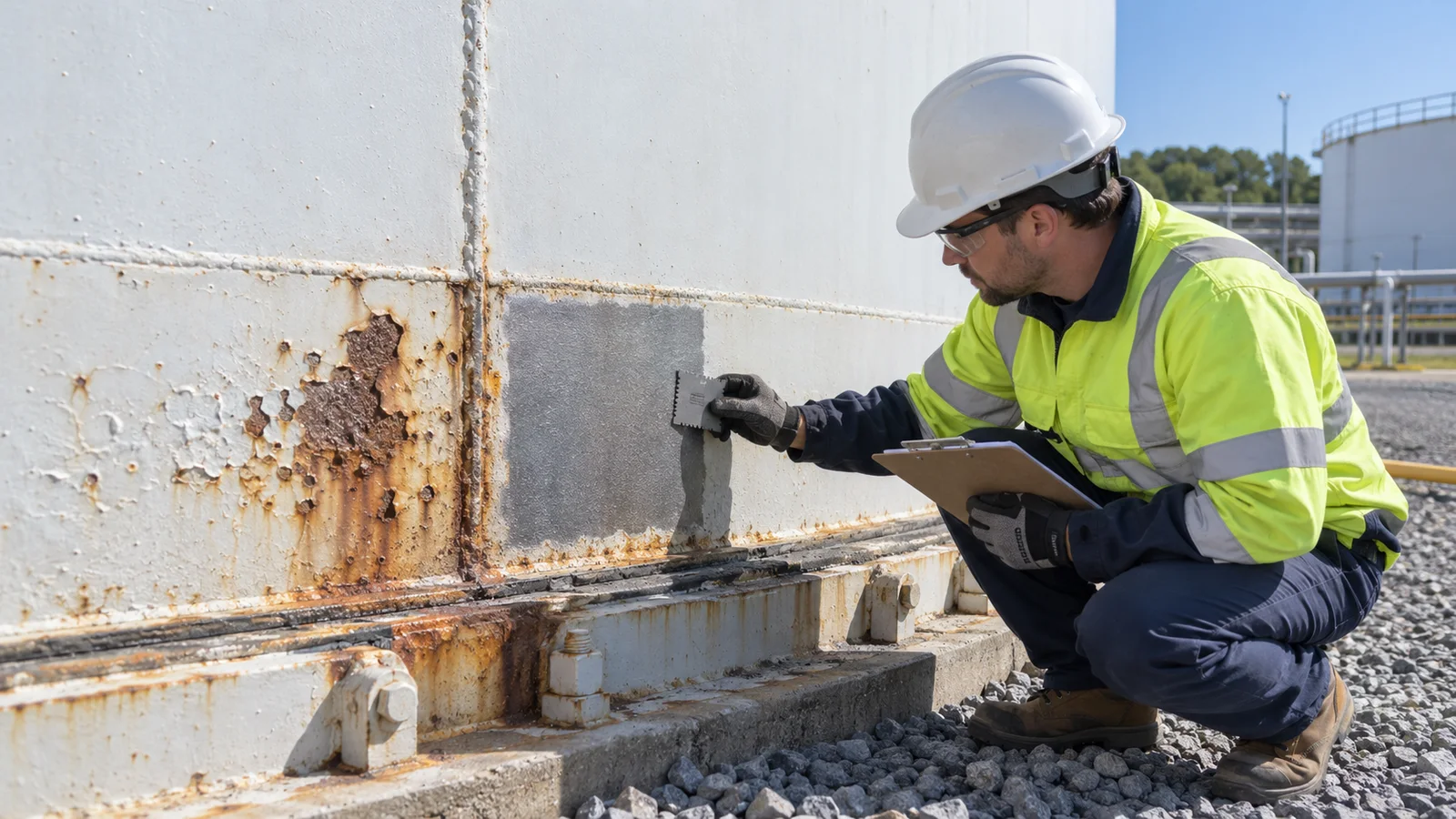
A test area connects the specification to the actual tank. Choose a location with representative coating, corrosion, curvature, welds, and lower-shell details—not only a convenient patch of lightly weathered steel.
Use the test area to agree on:
- coating and corrosion that must be removed;
- sound existing coating that may remain, if any;
- visual cleanliness and surface-profile requirements;
- feathered transitions at retained coating;
- treatment of pits, welds, seams, edges, and fasteners;
- acceptable flash rust when wet preparation is used;
- dust, salt, profile, and environmental test methods;
- the inspector and documentation required for acceptance;
- the maximum interval and surface condition before primer.
AMPP’s surface-preparation standards overview covers abrasive blast cleaning, hand and power-tool cleaning, media, contaminants, and surface-profile evaluation. The project should name the applicable standard and supplementary acceptance criteria rather than relying on “remove the rust” or “clean metal.”
Match Preparation to Tank Geometry
Broad shell plates may be productive to blast, but the difficult details often control coating life. Curvature changes nozzle angle. Welds, seams, reinforcement plates, brackets, anchor details, and the shell-to-foundation interface can trap coating and corrosion. The roof, underside of platforms, and backs of supports may require different access and handwork.
Wet abrasive blasting can be useful where reducing airborne dust is important and the site can manage moisture, runoff, and flash rust. Dry blasting, power tools, waterjetting, and combined methods may fit other conditions. The coating specification, substrate, existing material, geometry, containment, and site restrictions should drive selection.
Do not use one aggressive setup everywhere simply because it works on the broad shell. Thin components, galvanized pieces, seals, nameplates, instrumentation, and gasketed or bolted details may require protection or a different approach. Confirm exclusions and masking during the test-area review.
Plan Access for Preparation, Inspection, and Coating
Ground-level work is only one part of most tank exteriors. Roof edges, upper courses, platforms, vents, ladders, and appurtenances require a qualified access plan. The preparation crew, inspector, repair trade, and coating applicator must be able to reach the same areas safely and in sequence.
Depending on tank height and site conditions, qualified providers may evaluate lifts, scaffolding, suspended access, or other engineered systems. Confirm ground bearing capacity, slopes, containment space, overhead lines, underground utilities, wind limits, rescue planning, hose management, and falling-object controls.
Fixed tank ladders and platforms should not automatically be treated as a complete work platform. Their condition and authorized use belong in the owner’s access review. If a prepared area cannot be inspected and primed from the same access system, the production plan needs revision before mobilization.
Design Containment Around the Site and Tank Contents
Tank sites may include active process equipment, neighboring tanks, piping, vehicles, electrical systems, drains, soil, waterways, occupied property, and public roads. Controls should reflect the coating being removed, the preparation method, wind, and the sensitivity of nearby assets.
Possible measures include ground covers, portable screens, full or partial enclosures, drain protection, masking, controlled recovery areas, filtration, and staged waste containers. Wet preparation generates mist, water, abrasive, rust, and coating debris. Dry preparation can require extensive enclosure and dust collection. Neither should be described as containment-free.
Tank curvature can redirect rebound and runoff farther than a flat test panel suggests. Verify controls in the representative area before expanding production. Establish pause conditions for wind, rain, lightning, heat, cold, and other site-specific weather. For a broader mobilization checklist, review mobile blasting site planning.
Add Steel-Repair and Inspection Hold Points
Preparation is an inspection opportunity, not a repair. Removing coating can expose pits, metal loss, damaged welds, leaking details, or failed previous repairs. The work plan should state who evaluates those findings and who can authorize continuation.
Create a hold point after initial removal and before final preparation. Label the location, photograph the condition, and route it to the responsible tank professional. Welding, grinding, plate replacement, seal work, and other repairs performed after final acceptance can damage or contaminate surrounding surfaces. Complete authorized repairs first, then reprepare the affected area.
Final records may include visual-cleanliness acceptance, surface-profile readings, soluble-salt or dust tests, photographs, air and steel temperature, relative humidity, dew point, and the time of primer application. The specification should define the instruments, frequency, limits, and responsible inspector.
Sequence Work Around Weather and Primer Capacity
Prepared steel is temporary. Condensation, rainfall, flash rust, dust, handling, and nearby operations can change an accepted surface before primer arrives. A large tank can expose more steel in a day than the coating crew can inspect and protect.
Divide the exterior into sections that can move through preparation, inspection, repairs, final acceptance, and primer within workable conditions. Confirm coating-manufacturer limits for steel temperature, humidity, dew point, profile, contaminants, and recoat timing. If an inhibitor is proposed for wet preparation, verify its compatibility and approval rather than assuming it is acceptable.
Kansas, Oklahoma, and Texas weather can change the daily sequence quickly. Sun may heat one side of the shell while the shaded side remains near the dew point. Wind can challenge containment on the upper courses. A practical plan lets the crew shift sections or stop without leaving more exposed steel than the team can protect.
Send a Bid-Ready Tank Exterior Scope
A useful project request should include:
- site address or ZIP code and facility contact;
- tank use, status, construction type, diameter, height, and roof style;
- full-circumference photos and close-ups of representative failure;
- coating history, test results, substrate, and known contaminants;
- exterior surfaces included, excluded, insulated, or obstructed;
- nozzles, vents, instruments, piping, and components requiring protection;
- preparation standard, profile, and intended coating system;
- access responsibility and site limitations;
- isolation, permit, traffic, and operating requirements;
- containment, drainage, cleanup, and waste responsibilities;
- inspection, engineering, repair, primer, and topcoat responsibilities;
- schedule, shutdown, cure, and return-to-service milestones.
For multiple tanks, label every asset and photograph. A simple table with tank ID, service, dimensions, coating condition, and planned maintenance prevents estimators and site teams from working from different assumptions.
Frequently Asked Questions
Can the exterior be blasted while a storage tank remains in service?
That requires a tank- and site-specific decision by the owner or controlling contractor. Contents, vapors, vents, process connections, electrical classification, nearby operations, isolation, and facility procedures can affect whether exterior preparation is appropriate.
Does exterior blasting require entering the tank?
No. This guide is specifically about openly accessible exterior work. Any interior access or tank opening should be treated as a separate scope with the applicable confined-space, isolation, atmospheric, rescue, and coating controls.
Must the entire exterior coating be removed?
Not necessarily. The decision depends on adhesion, compatibility, corrosion, exposure, and the maintenance coating specification. Testing and an approved representative area should determine whether sound coating can remain.
Can wet abrasive blasting prevent all dust and debris?
No. It can reduce airborne dust compared with dry blasting, but it still generates mist, abrasive, coating fragments, rust, and runoff that require controls and cleanup.
How soon should prepared tank steel be primed?
Within the coating system’s allowed conditions and before rust, condensation, dust, or contamination makes the surface unacceptable. The correct handoff depends on the specification, weather, steel condition, and inspection timing—not a universal number of hours.
Request a Storage-Tank Exterior Project Review
Manases EcoBlast provides mobile wet abrasive blasting and surface preparation from Great Bend and Austin for qualified commercial and industrial projects across Kansas, Oklahoma, and Texas. Send the project ZIP code, tank-use information, exterior photographs, approximate diameter and height, coating condition, access details, desired surface requirement, and schedule to contact@manasesecoblast.com or call 512-592-1288.
For the fastest review, include one photograph of the full tank, close-ups of the lower shell and representative coating failure, the equipment-staging area, and the primer or coating requirement the prepared exterior needs to meet.