
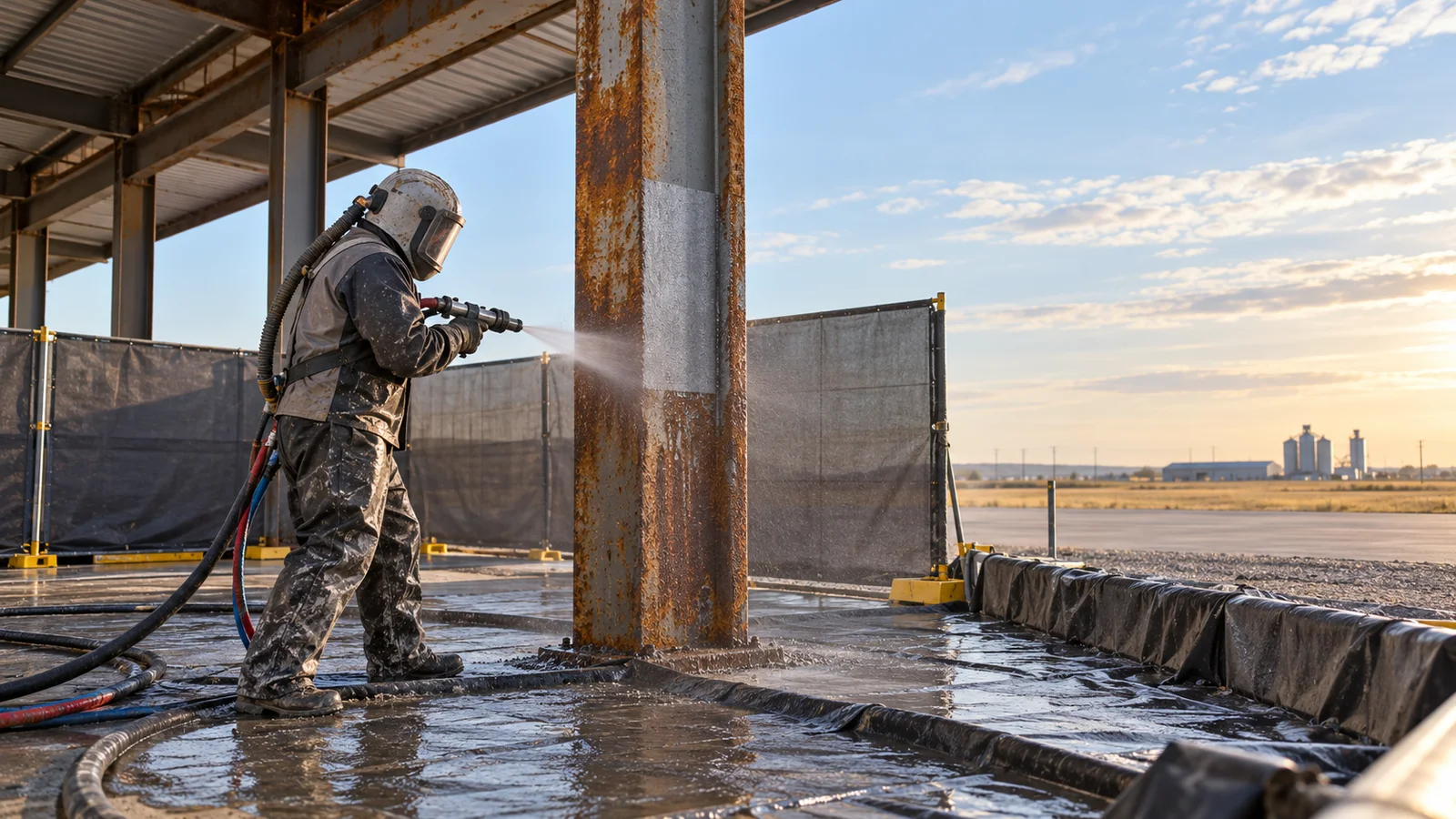
Structural steel rarely fails everywhere at once. Coating may still look sound across broad beam faces while rust advances at column bases, roof leaks, bolted connections, welds, edges, and places where water or process residue collects. Painting over that mixed condition can hide the problem for a season without creating a dependable maintenance system.
Effective structural steel surface preparation begins before the blasting equipment arrives. The owner, coating representative, inspector, access provider, preparation contractor, and painter need a shared definition of the asset, the required finish, and the handoff between trades. That alignment matters whether the work involves a warehouse canopy in central Kansas, production support steel in Oklahoma, or a commercial structure near Austin.
This guide focuses on coating removal and exterior or openly accessible steel preparation. It does not replace an engineering evaluation, coating specification, hazardous-material survey, or site-specific safety plan.
Define the Asset and the Maintenance Objective
“Structural steel” can mean primary frames, secondary supports, stairs, platforms, pipe racks, canopies, equipment skids, mezzanines, towers, or exposed building members. These components do not necessarily have the same coating, exposure, access, or consequence of failure. Start with an asset list and mark exactly what is included.
For each work area, record:
- member types, dimensions, approximate surface area, and elevations;
- carbon steel, galvanized steel, stainless steel, or mixed substrates;
- coating age, known products, number of layers, and past repairs;
- rust, chalking, peeling, blistering, impact damage, or chemical exposure;
- welds, bolts, sharp edges, crevices, base plates, and embedded interfaces;
- nearby roofing, concrete, glazing, machinery, vehicles, and occupied space;
- the proposed primer and finish-coat system;
- operating restrictions, shutdown windows, and completion milestones.
Then name the maintenance goal. Complete removal to a specified bare-metal condition, selective preparation of failed coating, and preparation for an overcoat are different scopes. So are cleaning steel for inspection and preparing it for a coating system. The phrase “blast and paint” does not establish which coating can remain, what surface profile is required, or who accepts the result.
The American Institute of Steel Construction notes that the owner’s designated design professional specifies the coating system and required surface preparation in the contract documents. Its painting and surface-preparation guidance is a useful reminder that preparation should follow the service environment and coating specification—not a generic appearance.
Survey Where and Why the Coating Is Failing
Walk the structure before selecting a removal method. Photograph whole elevations, then capture representative close-ups with location labels. Look for patterns rather than treating every rust spot as an isolated blemish.
Column bases may stay wet because of poor drainage, washdown, landscaping, or contact with soil and debris. Upper flanges and horizontal ledges collect dust and water. Roof or wall leaks can corrode protected interior steel. Bolted joints and lap plates create crevices. Handrails and stairs receive repeated wear, while loading areas may show impact damage. Process areas can add oil, salts, chemicals, heat, or condensation.
Record coating condition separately from steel condition. Surface preparation can expose pitting, section loss, loose fasteners, damaged welds, or previous repairs, but blasting does not determine whether a member remains structurally adequate. When deterioration may affect capacity or connections, the owner should route the finding to a qualified engineer or other responsible professional.
Older and specialized coatings also deserve representative testing before disturbance. Lead, chromium, and other regulated constituents can change worker protection, containment, hygiene, waste characterization, and disposal. Wet abrasive blasting can reduce airborne dust compared with dry blasting, but water does not neutralize a hazardous coating. OSHA’s abrasive-blasting fact sheet explains that hazards may come from both the abrasive and the material being removed.
Clean Contamination Before Abrasive Preparation
Oil, grease, shop residue, salts, bird waste, process deposits, and other contamination can interfere with removal and recoating. Blasting over grease can drive or spread contamination instead of removing it. Heavy dirt can also hide coating failure and waste abrasive.
Identify compatible cleaning and rinsing steps with the coating team. Protect electrical components, bearings, instrumentation, openings, and materials that cannot tolerate water or abrasive. At active plants, the owner should isolate process contamination and release a clearly defined work zone.
Cleaning may reveal a larger repair area than the initial walkdown suggested. Build that possibility into the scope instead of asking the production crew to make coating or structural decisions in the field.
Approve a Representative Test Area
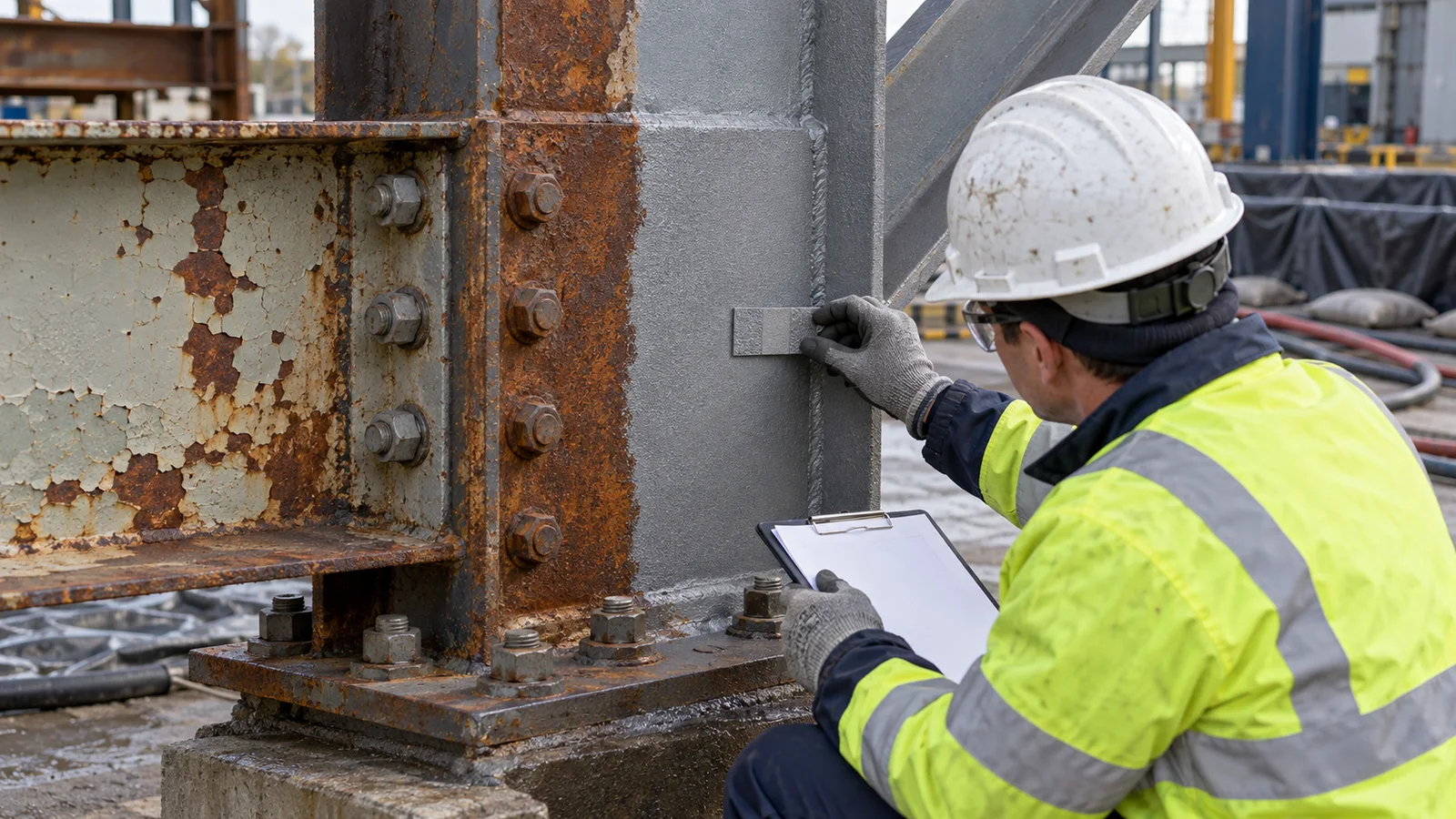
A test area converts written requirements into a visible, measurable field standard. Select a location that includes typical coating, corrosion, welds, edges, and a connection—not only a flat, lightly weathered face at ground level.
Use the test to agree on:
- which coating and corrosion products must be removed;
- whether tightly adhered existing coating may remain;
- the required visual cleanliness and surface-profile range;
- edge treatment between retained coating and exposed steel;
- expectations at pits, welds, bolts, crevices, and sharp edges;
- acceptable flash rust if wet abrasive preparation is used;
- test methods for dust, salts, profile, and environmental conditions;
- the person authorized to accept the surface;
- primer compatibility and maximum exposure before coating.
AMPP’s surface-preparation standards overview covers dry and wet abrasive blast cleaning, hand and power-tool cleaning, contaminants, media, and profile evaluation. The project documents should name the applicable standard and any supplementary criteria. “Clean metal” is not a repeatable acceptance requirement.
Match the Method to Geometry and Coating Requirements
Abrasive blasting can remove corrosion and coating while creating a new anchor profile. Wet abrasive blasting may be a strong fit where reducing airborne dust is important and the site can manage moisture, runoff, and flash rust. Dry blasting, power tools, waterjetting, chemical removal, and combined methods may fit other conditions.
Structural steel geometry affects every option. Inside corners, backs of angles, stiffener plates, bolt heads, weld toes, flange undersides, and narrow gaps require different nozzle access than broad web faces. An approach that produces the desired finish on an open column may not reach a built-up connection consistently.
The least aggressive setting that meets the coating requirement is generally the useful starting point for a test. Media, pressure, nozzle angle, dwell time, and distance all affect production and surface condition. Galvanized members and thin secondary components require particular care because an overly aggressive process can damage the surface or distort light material.
Plan Access as Part of the Work, Not an Add-On
If the preparation crew, inspector, repair trade, and painter cannot safely reach the same surface, the coating sequence will break down. Map access for each phase before mobilization.
Depending on height, geometry, ground conditions, and site rules, qualified providers may evaluate lifts, scaffolding, suspended systems, or other engineered access. Confirm floor and soil capacity, overhead lines, buried utilities, door clearances, traffic routes, and equipment setup space. Elevated work also requires appropriate fall protection, falling-object controls, wind limits, rescue planning, and hose management.
Access frequently reveals scope gaps. A lift may reach the beam face but not the roof-side flange. Scaffolding may block an area that needs coating. Containment can reduce visibility or working space. Include the inspector and coating applicator in the access review so the prepared surface can be accepted and protected without improvisation.
Protect the Building and Ongoing Operations
Commercial and industrial steel often sits beside employees, tenants, inventory, vehicles, air intakes, electrical equipment, glass, roofing, landscaping, and neighboring property. The control plan must reflect both the removed material and what surrounds it.
Possible measures include portable screens, ground covers, partial or full enclosures, drain protection, masking, controlled collection points, ventilation, and restricted-access zones. Wet methods can reduce airborne particulate but produce mist, water, and slurry. Dry methods may need more extensive enclosure and dust collection. Neither process is automatically clean or containment-free.
Plan compressor and support-equipment locations, hose crossings, noise, deliveries, emergency access, and daily cleanup. If the property remains open, identify who controls pedestrian and vehicle movement and when noisy work is allowed. Coordinate shutdowns for sensitive machinery or ventilation systems rather than relying on temporary covers alone.
Weather is part of production across Kansas, Oklahoma, and Texas. Wind can move mist or debris beyond controls. Rain can overload collection areas. Heat, cold, humidity, condensation, and steel temperature can shorten the preparation-to-primer window. Establish measurable pause conditions and a daily sequence that can change with the forecast.
For a broader mobilization checklist, see how to plan a mobile blasting site.
Put Repair and Inspection Hold Points in the Schedule
Do not wait until the full structure is bare to decide what happens when preparation exposes defects. Establish a hold point after initial removal, give the owner or engineer a way to mark repairs, and define who documents the decision.
Grinding, welding, drilling, bolt replacement, sealant removal, and steel replacement can damage or contaminate accepted surfaces. Complete authorized repairs before final preparation whenever practical. Then reprepare affected areas and present them for inspection.
Inspection should be tied to identified work sections. Depending on the specification, records may include photographs, visual-cleanliness acceptance, surface-profile measurements, dust or soluble-salt tests, ambient conditions, steel temperature, and time of primer application. The owner should define instrument, frequency, acceptance limits, and record ownership.
The AISC discussion of surface preparation also emphasizes the connection among the intended coating, exposure, and preparation requirement. A bright-looking surface alone does not confirm that invisible contamination, profile, or environmental criteria have been met.
Coordinate the Blast-to-Primer Handoff
Prepared steel is a temporary condition. Moisture, condensation, dust, fingerprints, nearby work, and ordinary exposure can make an accepted surface unsuitable for coating. Wet-prepared steel also needs an agreed approach to drying and flash rust.
Before production begins, confirm:
- who monitors weather and surface conditions;
- who performs and records final acceptance;
- who applies primer and supplies the coating materials;
- whether any inhibitor is proposed and approved by the coating manufacturer;
- the allowed condition and time interval before primer;
- how prepared areas are protected from other trades;
- what happens when repairs or weather interrupt the sequence.
Break the structure into areas the team can prepare, inspect, repair if needed, accept, and prime within workable conditions. A blasting crew that exposes more steel than the painter can protect has not improved the overall schedule.
Build a Bid-Ready Structural-Steel Scope
A complete request helps contractors evaluate fit, access, controls, and production before a site visit. Include:
- address or ZIP code, site contact, and operating hours;
- an asset list, drawings if available, dimensions, elevations, and quantities;
- wide photographs of each work face and close-ups of typical failure;
- substrate, coating history, thickness, adhesion, and hazardous-material results;
- areas included, excluded, or obstructed;
- the preparation standard, profile, and intended coating system;
- access responsibility, ground conditions, and equipment limitations;
- containment, masking, drainage, cleanup, and waste expectations;
- site isolation, traffic, shutdown, and permit requirements;
- inspection, engineering, repair, primer, and topcoat responsibilities;
- schedule milestones and return-to-service needs.
Labeling each elevation and connection type makes photographs much more useful. It also prevents the estimator, access provider, inspector, and painter from using different definitions of the project.
Frequently Asked Questions
Does all structural-steel coating need to be removed?
Not always. Some maintenance systems permit sound, compatible coating to remain after cleaning, edge preparation, and testing. The decision should follow coating condition, adhesion, exposure, corrosion, and the new system’s written requirements.
Can blasting tell whether corroded steel is structurally safe?
No. Preparation can expose pitting, section loss, cracked welds, and deteriorated connections, but the owner’s qualified professional determines structural adequacy and repairs.
Is wet abrasive blasting dust-free?
No. Water can reduce airborne dust, but the process can still create mist, debris, rebound, and contaminated runoff. Controls should be based on the coating, abrasive, site, and surrounding operations.
What surface-preparation standard should we specify?
That depends on the coating system, substrate, exposure, and maintenance objective. The coating designer or responsible specification professional should identify the applicable AMPP/SSPC or other project standard, profile, testing, and acceptance criteria.
How soon must prepared steel be primed?
Before rust, condensation, dust, or other contamination makes the surface unacceptable and within the coating manufacturer’s limits. There is no universal number of hours; surface condition and environmental requirements control the handoff.
Request a Structural-Steel Project Review
Manases EcoBlast provides mobile wet abrasive blasting and surface preparation from Great Bend and Austin for qualified commercial and industrial projects across Kansas, Oklahoma, and Texas. Send the project ZIP code, asset photographs, approximate dimensions and elevations, coating condition, access information, desired surface requirement, and timeline to contact@manasesecoblast.com or call 512-592-1288.
For the fastest review, include one wide photograph of every work face, close-ups of representative rust and coating failure, the equipment-staging area, and the primer or coating specification the prepared steel needs to meet.