
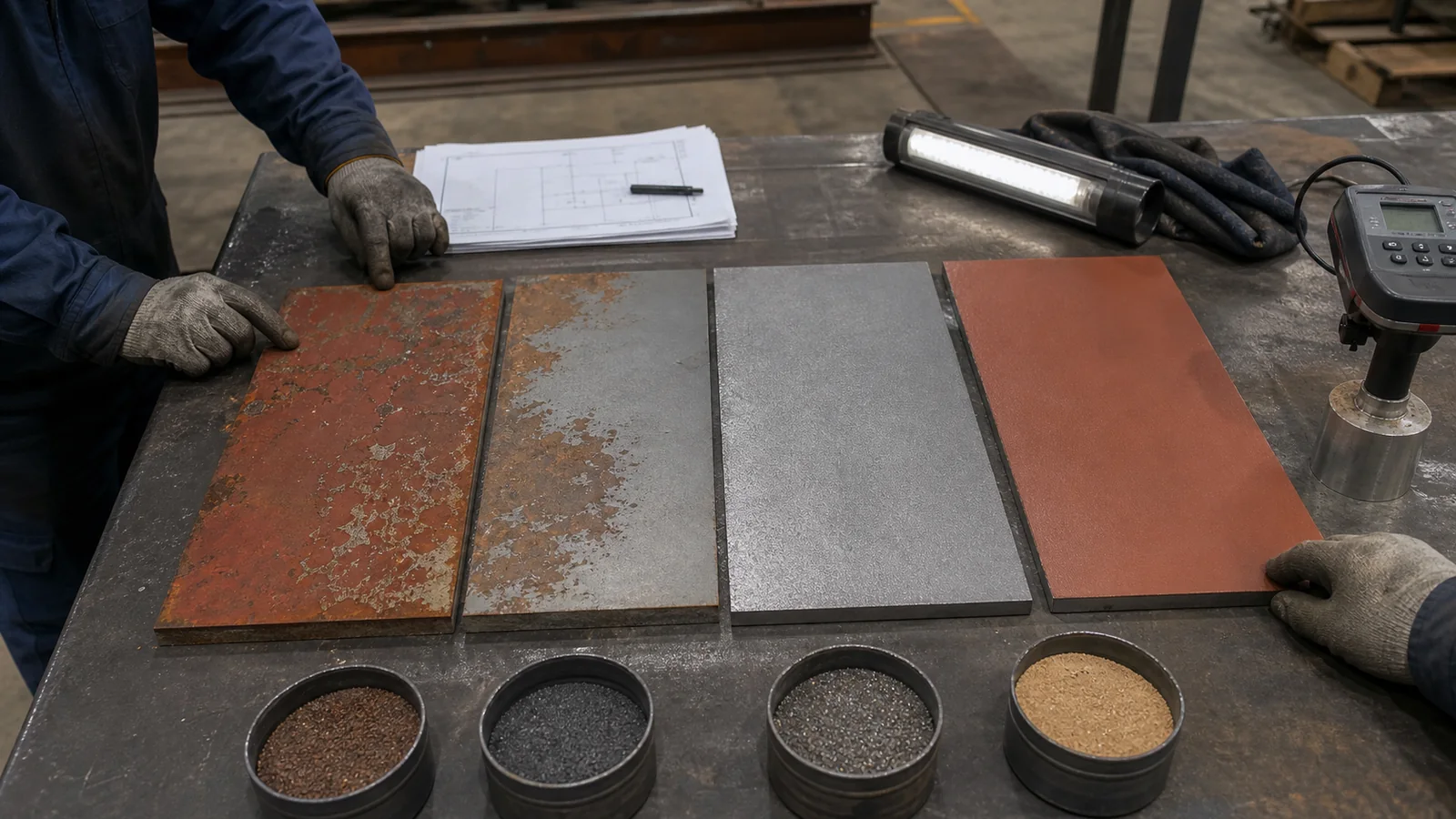
Industrial coating removal is rarely an isolated cleaning task. It is the transition between a failing protective system and the next one, and the quality of that transition can influence adhesion, corrosion performance, scheduling, and maintenance access. A productive plan therefore starts with the new coating requirements rather than treating removal as a race to expose bare metal.
Abrasive blasting is one option for removing paint, rust, scale, and some linings from durable commercial surfaces. Wet abrasive blasting can reduce airborne dust compared with dry blasting, though it is not dust-free. Power tools, chemical stripping, waterjetting, and combinations of methods may also have a role. Selection should follow the substrate, coating, site, and specified finished condition.
Survey the Asset Before Removal
Begin with a condition survey that records coating failure, corrosion, geometry, access, and operational constraints. Photograph representative areas and identify peeling, blistering, underfilm corrosion, mechanical damage, pitting, and prior repairs. Dimensions, component counts, and approximate square footage help translate observations into a bid-ready scope.
Not every discolored area represents the same failure. Moisture intrusion, chemical exposure, ultraviolet degradation, poor original preparation, incompatible layers, and abrasion can produce different patterns. Understanding the likely cause helps the owner avoid installing a new system over an unresolved condition.
Assess the base material as well. Removal can reveal metal loss, cracks, damaged welds, deteriorated concrete, or previous patching that was hidden by paint. The scope should establish a hold point for owner inspection and define who decides whether repairs are required before preparation continues.
Identify Coatings and Potential Contaminants
Existing records may identify products and application dates, but field conditions should not be assumed from color alone. Older coatings or specialized industrial systems can contain regulated constituents. The owner or controlling contractor may need representative testing before disturbance.
Testing affects more than worker protection. It can change containment design, hygiene provisions, environmental controls, waste profiling, transportation, and disposal. Wet abrasive blasting suppresses airborne dust, but water does not neutralize lead or other hazardous material. The resulting slurry and debris still need appropriate management.
Industrial surfaces may also carry oil, grease, process residue, or soluble salts. Blasting over grease can spread contamination rather than remove it. Pre-cleaning, isolation, and verification should be coordinated with the coating specification. A visually bright surface is not necessarily free of invisible contaminants.
Select a Removal Method Around the Specification
Abrasive blasting can remove tightly adhered films and create an anchor profile in one operation. Dry blasting may fit an enclosed facility with established dust collection. Wet blasting can be useful where reducing airborne dust is a priority and moisture can be controlled. Each method brings different containment, cleanup, and turnover needs.
Power-tool cleaning may fit localized repairs, edges, or sites where full blasting is impractical. Chemical stripping can remove certain coatings without creating blast profile, but dwell time, residue, substrate compatibility, and chemical waste require close attention. Waterjetting can remove coatings and contaminants but generally exposes the existing profile rather than creating a new one.
The coating manufacturer’s requirements and project documents should identify acceptable preparation methods, visual cleanliness, profile, and time limits. If they do not, resolve those criteria before field work. A method should not be chosen solely because it performed well on a different asset.
Design Containment and Protect Operations
Industrial projects often sit inside active businesses. Overspray, abrasive, water, and debris can affect employees, vehicles, air intakes, production lines, instrumentation, landscaping, and neighboring property. Define the work zone, access controls, masking, ventilation needs, and traffic plan before mobilization.
Wet blasting reduces airborne particulate but can generate mist and runoff. Ground covers, berms, screens, drain protection, and recovery equipment may be needed. Dry work may require more extensive enclosure and dust collection. The appropriate system depends on what is removed and what surrounds the asset.
Plan for noise, hose routing, compressed-air equipment, staging, and emergency access. Sites across KS, OK, and TX should also include weather triggers. Wind can transport mist or dust beyond controls, and temperature or humidity may affect both safe work and coating application.
Containment should support production without hiding the surface from inspection. Lighting and access must allow the team to see corners, backs of flanges, welds, pits, and other areas where coatings commonly fail.
Establish Inspection and Acceptance Points
Define acceptance before removal begins. Industrial coating projects may specify a recognized visual cleanliness level, an anchor-profile range, dust limits, soluble-salt testing, or other criteria. The responsible inspector, measurement method, frequency, and documentation should be clear.
An approved test area can align expectations among the owner, blasting contractor, inspector, and coating applicator. Select a representative location rather than the easiest flat panel. Include typical coating buildup, corrosion, edges, and difficult geometry.
Useful hold points may occur after pre-cleaning, after initial removal, after repairs, after final surface preparation, and before primer. This sequence prevents the project from coating over unresolved contamination or discovering structural issues after crews have moved on.
Blasting uncovers defects but does not repair them. Deep pits may remain after the surface meets a visual cleaning standard. The owner and coating designer should determine whether filling, welding, replacement, stripe coating, or another response is appropriate.
Coordinate Surface Preparation and Recoating
Prepared steel is time-sensitive. Dry-blasted steel can rust when exposed to moisture, while wet-blasted steel has a particular risk of flash rust. Relative humidity, surface temperature, weather, water quality, and contamination all affect the available coating window.
Break the asset into sections that can be prepared, inspected, and primed within workable conditions. Confirm who monitors ambient conditions, who accepts the surface, and who has authority to stop work. If an inhibitor or additive is proposed, verify compatibility and obtain the approvals required by the coating system.
Scheduling should also account for repairs and other trades. A discovered metal defect can interrupt the preparation sequence, while nearby welding or concrete work can recontaminate a completed surface. Protect accepted areas and establish responsibility for cleaning them if follow-on work creates dust or residue.
A complete request for proposal should include asset location, photos, drawings, quantities, access heights, coating history, test results, required surface standard, planned coating, and operating hours. Identify confined or restricted areas, isolation status, nearby processes, water and power availability, and schedule milestones.
Assign responsibilities for scaffolding or lifts, masking, disassembly, containment, waste characterization, containers, hauling, inspection, repairs, and coating. State whether the contractor is pricing removal only or a coordinated preparation-and-coating sequence. Clear boundaries make bids easier to compare.
Frequently Asked Questions
Must all old industrial coating be removed?
Not always. Some maintenance systems permit sound, compatible coating to remain after cleaning and edge preparation. The decision depends on adhesion, compatibility, failure pattern, exposure, and the new coating specification.
Can wet abrasive blasting remove heavy coatings?
It can remove many industrial coatings, but productivity depends on thickness, chemistry, adhesion, geometry, media, and equipment settings. A representative test area is the best way to assess the proposed approach.
How soon should prepared steel be primed?
As soon as required by the coating specification and before rusting or contamination makes the surface unacceptable. Conditions and surface state, rather than a universal number of hours, should govern the decision.
What should an owner provide for project review?
Send photos, available plans, the site ZIP code, estimated dimensions or square footage, coating records or test results, access constraints, intended coating system, and timeline. Identify active operations and known sensitive areas.
Start an Industrial Coating Removal Review
Manases EcoBlast supports commercial and industrial teams from Great Bend and Austin throughout Kansas, Oklahoma, and Texas. Send project photos, plans, ZIP code, approximate size, and desired timeline to contact@manasesecoblast.com or call 512-592-1288. Include the substrate, known coating information, access limits, and intended finish so the team can review preparation, containment, and turnover needs.