Exterior process piping can look like a simple collection of painted cylinders, but a maintenance crew sees a connected system of lines, valves, flanges, drains, vents, instruments, supports, insulation terminations, labels, and operating boundaries. Corrosion often concentrates at pipe shoes, clamps, low points, welds, and places where water or residue remains. Repainting those areas successfully requires much more than removing visible rust.
Effective industrial piping surface preparation begins with the owner’s line identification, isolation plan, coating specification, and shutdown schedule. The work must protect functional components, expose defects for qualified review, create the required surface condition, and hand the area to the coating team before clean steel deteriorates.
This guide addresses exterior preparation of accessible piping, valves, and support steel. It does not authorize opening a process system, removing insulation, disturbing hazardous material, operating valves, entering restricted spaces, or deciding that a line is safe. Those responsibilities remain with the facility and its qualified personnel.
Define the System and Work Boundary
Start with a line list or marked drawing rather than a general instruction to “blast the pipe rack.” Identify the exact lines, equipment limits, elevations, supports, valve groups, and structural members included. Separate work that can occur during normal operation from work that requires a planned outage.
A useful scope records:
- facility, unit, work-order, line, and asset identifiers;
- service, operating status, material, diameter, and insulation status;
- piping, valves, flanges, strainers, drains, vents, instruments, and supports included;
- coating type, approximate age, layers, condition, and maintenance history;
- known leaks, repairs, temporary clamps, thin areas, or inspection findings;
- access method, scaffolding responsibility, and restricted zones;
- isolation, release, permit, and return-to-service authority;
- preparation standard, surface profile, coating system, and inspection points;
- containment, cleanup, waste, and production-protection requirements.
Color and location are not enough to identify a line or its contents. The facility should verify every asset against current records and field markings. The surface-preparation contractor should work only inside the released boundary.
Require Owner-Controlled Isolation and Release
Blasting a pipe exterior does not intentionally open the line, but the work can occur near stems, packing glands, small-bore connections, drains, gauges, tubing, electrical devices, hot surfaces, and corroded metal. Abrasive, water, hose movement, vibration, and access equipment can affect components that were not designed to receive them.
The facility’s authorized personnel should determine the necessary shutdown, isolation, depressurization, draining, purging, cooling, lockout or tagout, and verification steps. OSHA’s lockout/tagout interpretive guidance specifically notes that the standard applies to piping systems and requires potentially hazardous stored or residual energy to be rendered safe when applicable. A paint-removal crew should never infer that a closed valve or quiet line is an adequate isolation boundary.
Before mobilization, confirm:
- who identifies and releases each line;
- which permits and gas tests the site requires;
- whether adjacent equipment remains operating;
- temperature and residual-energy limits;
- how isolation is marked and verified;
- who may operate valves, drains, vents, blinds, or electrical devices;
- stop-work and emergency communication;
- who accepts the prepared surface and returns the system to service.
If the owner cannot establish a safe work boundary, preparation waits. Schedule pressure does not transfer process-control responsibility to the blasting crew.
Survey Coating Failure and Corrosion Patterns
Photograph the complete work area and representative details before disturbing the coating. Look for chalking, peeling, blistering, underfilm rust, staining from leaks, chemical deposits, damaged insulation terminations, and previous spot repairs. Record whether corrosion is isolated or repeats across similar details.
Pay close attention to:
- pipe shoes and the contact area above supports;
- clamps, U-bolts, guides, hangers, and spring-support components;
- welds, branches, reducers, elbows, tees, and low points;
- flange edges, bolts, valve bodies, bonnets, and packing areas;
- small-bore connections, impulse tubing, drains, and vents;
- splash zones, washdown areas, and points below roof or insulation leaks;
- crevices between piping and adjacent structural steel;
- damaged jacketing and suspected corrosion under insulation.
Surface preparation may expose pitting, metal loss, cracked attachments, leaking seals, failed welds, or damaged support components. It does not determine remaining wall thickness or fitness for service. Establish a hold point so the owner’s inspection or engineering team can evaluate defects before coating hides them again.
Treat Insulation and Specialty Materials as Separate Decisions
Insulation, jacketing, mastics, sealants, and fireproofing are not ordinary masking materials. Their removal can expose corrosion, moisture, fibers, chemicals, hot surfaces, or regulated substances. The owner should define what qualified trade removes and reinstalls them, how the exposed system is inspected, and where the blasting scope begins.
Do not disturb suspect asbestos-containing material, lead-containing coating, or other hazardous material without testing and a compliant work plan. Coating color cannot identify its chemistry. Representative testing before disturbance can affect containment, respiratory protection, hygiene, waste characterization, and disposal.
Also verify the base material. Carbon steel, galvanized steel, stainless steel, aluminum, and specialty alloys can require different abrasives, cleanliness standards, and contamination controls. An aggressive method selected for carbon steel can damage a softer substrate or embed material that creates later corrosion concerns.
Clean Contamination Before Blasting
Abrasive blasting should not drive oil, grease, salts, process residue, or chemical deposits into the surface. The facility should identify contamination and provide the cleaning method, collection plan, and acceptance criteria. Depending on the service, preparation may begin with compatible detergent cleaning, degreasing, rinsing, or another approved process.
Do not treat an unknown stain as harmless. Residue around a flange, valve stem, drain, instrument connection, or damaged coating may indicate an active leak. Stop and let operations evaluate it. Surface preparation proceeds only after the owner confirms that the condition is controlled and the area is released.
Where soluble salts or other nonvisible contamination are a concern, the coating specification should define testing locations, frequency, and acceptance limits. A visually bright surface does not prove that it is coating-ready.
Approve a Representative Test Area
Choose a test area that includes typical pipe curvature, a weld, a support transition, a coating edge, and representative corrosion. Avoid approving the process on an easy straight section that does not reflect the difficult geometry.
The test should align the owner, preparation contractor, coating supplier, painter, and inspector on:
- coating and rust to be removed;
- sound existing coating that may remain, if permitted;
- required cleanliness and surface profile;
- feathered transitions at retained coating;
- acceptable treatment of pits, welds, edges, bolts, and crevices;
- media, pressure, angle, stand-off distance, and handwork;
- flash-rust limits for wet preparation;
- dust, debris, and nonvisible-contaminant checks;
- repair and inspection hold points;
- maximum time between acceptance and primer.
AMPP’s surface-preparation standards committee maintains standards for dry and wet abrasive blast cleaning, waterjetting, abrasive media, nonvisible contaminants, and surface-profile evaluation. The owner’s specification and coating manufacturer should identify the exact standard and profile instead of relying on phrases such as “clean it up” or “take it to bare metal.”
Mask Valves, Instruments, Labels, and Interfaces
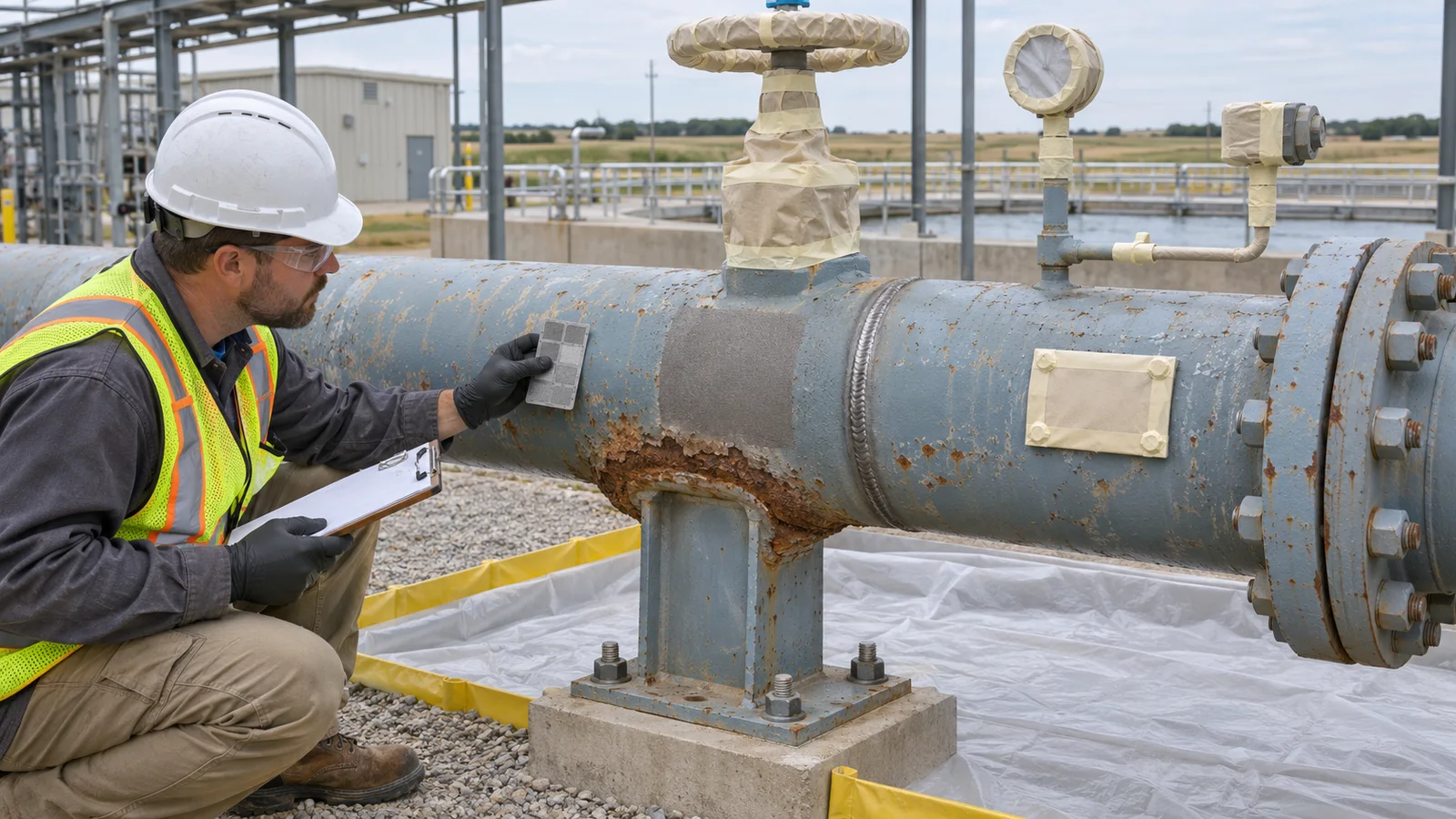
Detailed masking is central to piping work. The plan should be reviewed with operations, maintenance, inspection, and the coating supplier because not every visible component should receive abrasive or the same coating thickness.
Items that may require masking, removal by qualified personnel, or controlled hand preparation include:
- valve stems, position indicators, packing glands, and lubrication points;
- flange faces, gasket interfaces, bolt threads, and disassembly points;
- gauges, transmitters, switches, instrument tubing, and cable entries;
- vents, drains, sample points, relief-device openings, and weep holes;
- equipment nameplates, line numbers, flow arrows, barcodes, and inspection tags;
- grounding points, bonding connections, electrical enclosures, and heat tracing;
- stainless-steel components that must avoid carbon-steel contamination;
- sliding surfaces, bearings, springs, and calibrated support components.
Record labels and orientation before removal or masking so the correct identification returns to the correct line. Do not blast across a masking edge simply because the surrounding coating is difficult to reach. Tight areas may require smaller equipment, hand or power tools, or a revised scope.
Control the Work Zone Around Operating Facilities
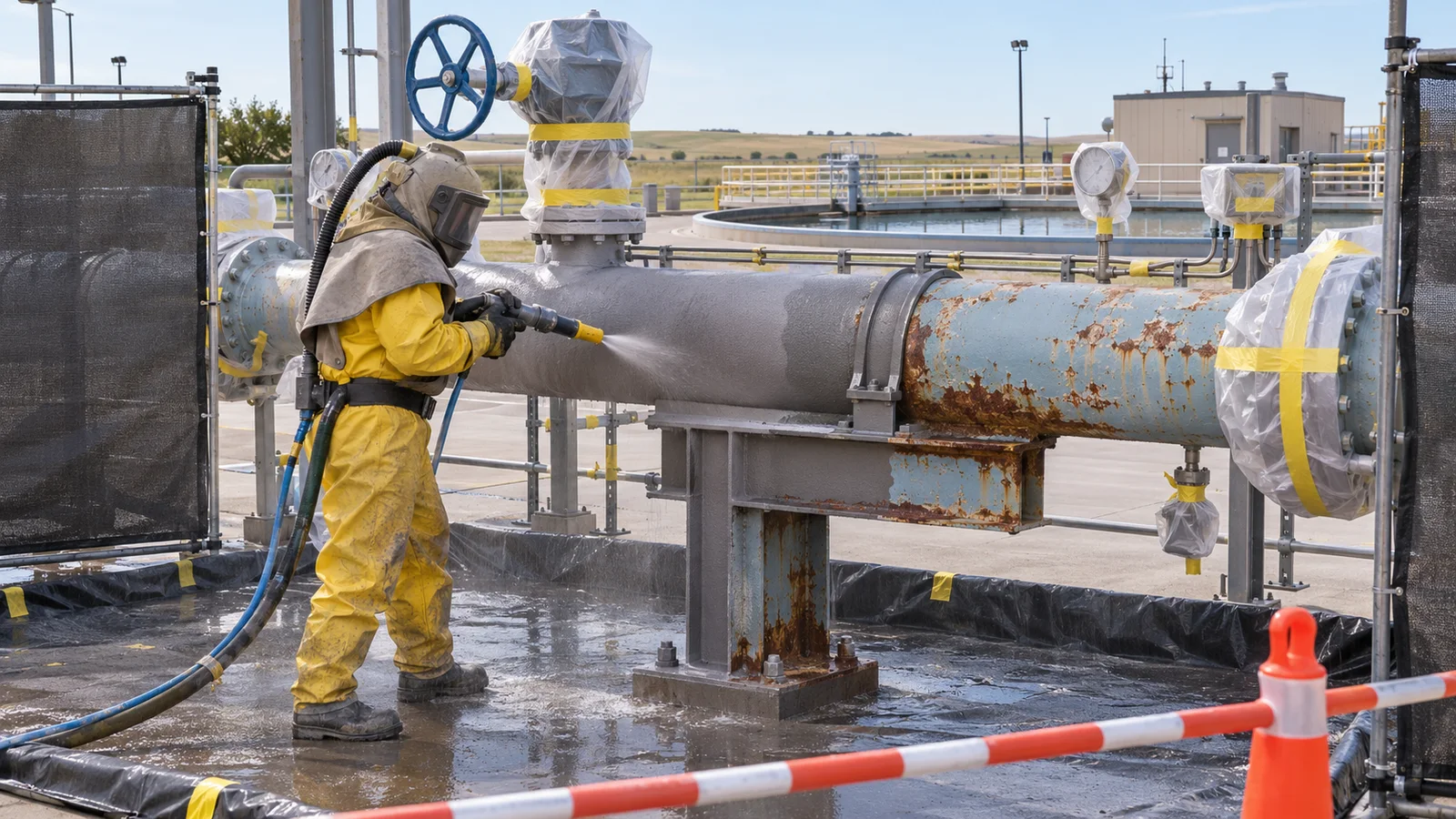
Wet abrasive blasting can reduce airborne dust compared with dry blasting, but it still creates mist, rebound, spent abrasive, coating fragments, rust, and runoff. OSHA’s abrasive-blasting fact sheet explains that hazards may come from both the abrasive and the coating or substrate being disturbed.
Facility controls may include:
- portable screens or full containment;
- ground liners, drain protection, and slurry collection;
- isolation of nearby air intakes and sensitive production areas;
- separation from hot work, vehicle traffic, pedestrians, and other trades;
- protected hose routes and controlled access points;
- wind, temperature, humidity, and weather limits;
- noise, respiratory, eye, skin, and hearing protection;
- housekeeping, sealed waste containers, and end-of-shift inspection.
Water changes the hazard picture around electrical equipment, insulation, instruments, and operating surfaces. Dry blasting changes dust and rebound controls. The method should follow the site assessment, coating specification, and containment plan rather than a general preference.
For a broader mobilization checklist, review mobile blasting site planning.
Match the Method to Pipe Geometry and Coating Requirements
Pipe curvature changes the nozzle angle constantly. Shadows form behind lines, clamps, supports, and valve bodies. Aggressive settings can damage thin small-bore piping, labels, soft alloys, seals, or already-corroded areas. A process that works on structural columns may need adjustment around connected piping.
Wet abrasive blasting can remove coating and create profile on suitable carbon steel while suppressing some dust. AMPP’s overview of wet abrasive blast cleaning notes the importance of removing leftover abrasive and managing flash rust. Power tools, hand tools, dry abrasive blasting, waterjetting, or combined methods may fit other locations.
The least aggressive method that achieves the specified result should be demonstrated through the test area. Waterjetting can clean but may not create a new anchor profile, while an overly deep abrasive profile can create coating-coverage problems. The required profile must match the coating system.
Coordinate Repairs Before Final Preparation
When cleaning exposes a defect, stop at the agreed hold point. The owner may require nondestructive examination, thickness measurements, engineering review, welding, component replacement, leak repair, or support adjustment. Those decisions belong to qualified facility personnel.
Final preparation often follows repairs so new welds, heat-affected areas, replacement steel, and damaged surrounding coating receive the same accepted finish. Confirm whether repair work introduces oil, weld spatter, marker, anti-spatter compound, or other contamination that must be removed.
Do not coat over an active leak, damaged packing area, questionable weld, or temporary repair merely to protect the schedule. An accurate exception list is more valuable than an artificially complete production total.
Sequence Primer, Stripe Coats, and System Identification
Prepared steel should move promptly through cleaning, inspection, and primer within the product’s environmental and time limits. Do not prepare more piping than the coating crew can accept and protect during the shutdown window.
The coating specification should define primer, intermediate and finish coats, dry-film thickness, environmental limits, recoat windows, cure, and treatment of existing compatible coating. Welds, edges, bolts, crevices, valve geometry, pipe shoes, and supports may require stripe coating before full coats.
Confirm the final color and identification plan. Process colors, line numbers, flow arrows, safety markings, inspection labels, and equipment tags may serve specific facility functions. They should be restored under the owner’s standard after the coating has cured, not improvised from neighboring lines.
Insulation, jacketing, heat tracing, guards, and removable components should return only after inspection and cure requirements are satisfied. The facility decides when masking is removed, components are checked, permits are closed, and the system returns to service.
Document Each Line and Hold Point
Use the same asset or line identifier throughout the work. A closeout package may include:
- marked scope drawings or line lists;
- isolation and release references supplied by the owner;
- before, defect, test-area, prepared, repaired, and completed photographs;
- coating-test and hazardous-material information;
- preparation standard and profile readings;
- dust, salt, or other specified test results;
- ambient conditions and preparation acceptance time;
- primer and finish products, batches, thickness, and cure records;
- restored identification and masking verification;
- exceptions, deferred areas, and owner decisions;
- acceptance and return-to-service responsibility.
Documentation should distinguish prepared piping, support steel, valves, and deferred components. A total square footage does not show which line or support still needs repair or inspection.
Send a Bid-Ready Piping Project Scope
A useful request for pricing includes:
- facility location, project ZIP code, and site contact;
- marked drawings, line list, photographs, and approximate dimensions;
- service, material, coating history, and operating status;
- known leaks, corrosion, insulation, hazardous-material tests, and repairs;
- owner’s isolation, release, permit, and return-to-service plan;
- required preparation standard, profile, and test-area process;
- valves, instruments, labels, electrical items, and interfaces to protect;
- access, scaffolding, containment, drainage, and cleanup requirements;
- coating products, colors, stripe coats, film thickness, and cure;
- inspection points, documentation, outage window, and working hours.
Wide photos establish the pipe-rack context. Close-ups should show typical coating failure, supports, valves, flanges, instruments, and difficult access. Do not enter restricted areas or cross barriers just to collect estimate photos.
Frequently Asked Questions
Can piping be blasted while the system is operating?
Only the facility can determine whether a specific line and work boundary are safe. The owner must evaluate process hazards, stored energy, temperature, adjacent operations, permits, and component protection before releasing the area.
Should valves and flange bolts receive the same preparation as straight pipe?
Not automatically. Functional interfaces, stems, packing areas, gasket boundaries, threads, labels, and disassembly points may require masking or a different method. Follow the owner and coating specification.
Can blasting reveal corrosion under insulation?
It can prepare steel after qualified personnel remove insulation and the owner releases the exposed area. It does not authorize insulation removal or determine whether suspect insulation materials are safe to disturb.
Is wet abrasive blasting dust-free?
No. It can suppress airborne dust compared with dry blasting, but it still generates mist, abrasive, coating debris, rust, and runoff that require containment and cleanup.
Can surface preparation determine whether a pipe is safe to operate?
No. Preparation may expose corrosion or defects, but qualified inspection and engineering personnel determine remaining thickness, required repairs, and fitness for service.
Request an Industrial Piping Project Review
Manases EcoBlast provides mobile wet abrasive blasting and surface preparation from Great Bend and Austin for qualified commercial and industrial projects across Kansas, Oklahoma, and Texas. Send the project ZIP code, marked scope, representative photos, line and support details, coating requirements, access plan, and shutdown schedule to contact@manasesecoblast.com or call 512-592-1288.
For the fastest review, identify who controls isolation and permits, which items require masking, whether insulation or hazardous coatings are present, and how much piping can be released, inspected, primed, and protected during each work window.