
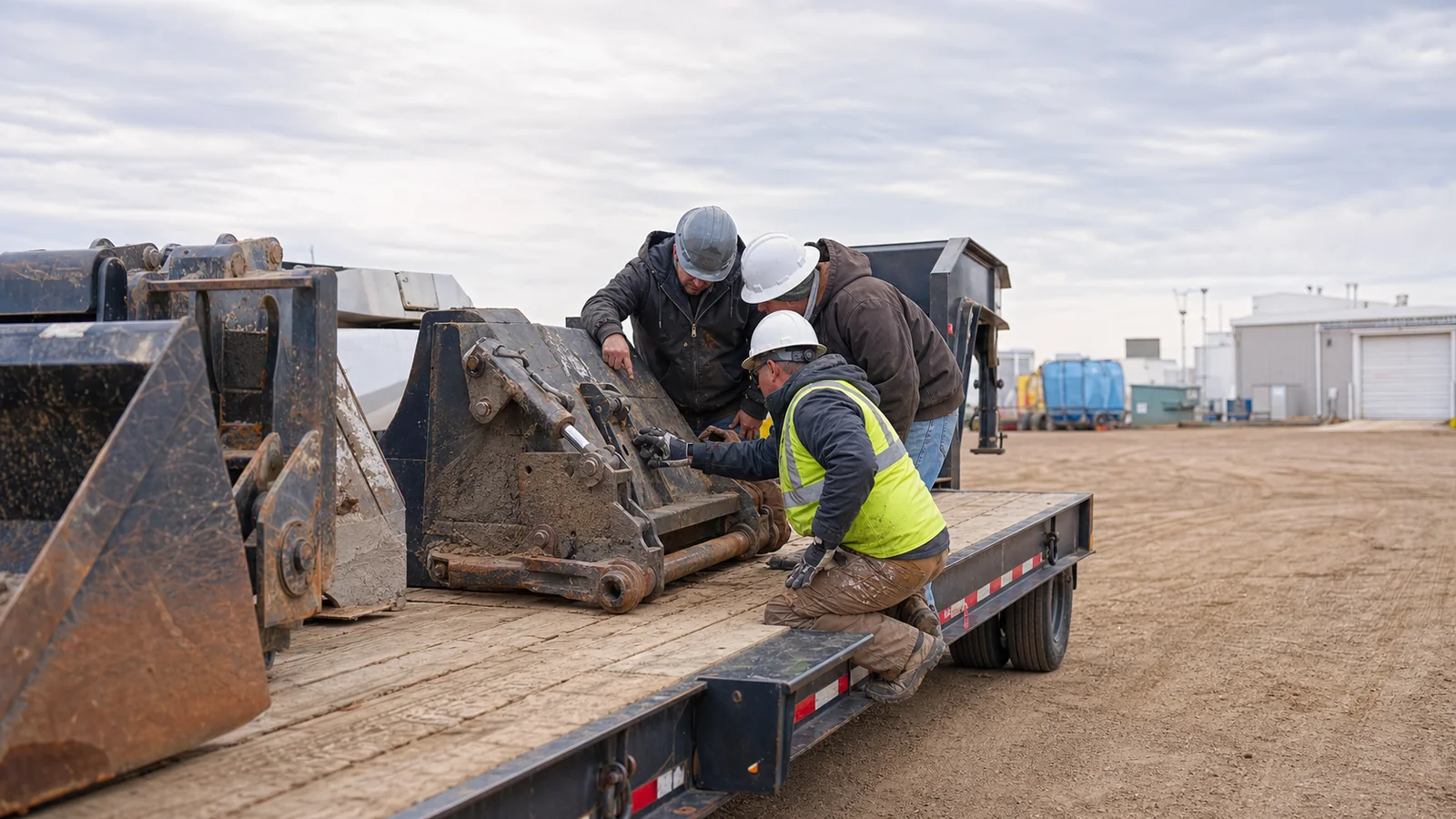
Rust and coating failure do not pause when a trailer, attachment, gate, or work truck is used less often. Moisture can remain in seams, road salt and soil can hold against steel, and a small coating chip can become a wider area of underfilm corrosion. Waiting until the unit is urgently needed can turn planned maintenance into a conflict between production and repair.
Winter and early spring can provide a useful window because many owners can schedule downtime before peak operations. The right timing depends on workload, weather, controls, repair capacity, and coating requirements. A successful plan connects inspection, preparation, repairs, coating, cure, and return to service.
Manases EcoBlast operates from Great Bend, Kansas, and Austin, Texas, providing mobile surface preparation across Kansas, Oklahoma, and Texas. Regional conditions vary, so seasonal work should be based on the actual forecast and specification rather than a blanket promise about winter or spring.
Corrosion Continues During the Off-Season
Idle equipment is not necessarily dry. Moisture, fertilizers, soil, and road chemicals can remain in joints and deposits. Coatings tend to break first at edges, welds, fasteners, impact zones, and crossmembers. Corrosion can then spread beneath intact-looking film.
Look beyond obvious orange rust. Check for blistering, lifting edges, cracks, impact damage, trapped debris, blocked drains, and seam staining. Photograph the same zones on comparable units to identify repeat problems.
Surface preparation does not restore lost thickness, certify structural integrity, or repair welds. When cleaning exposes pitting, cracks, or patches, qualified personnel should decide what happens next. A planned hold point keeps that decision from derailing coating day.
Use Seasonal Downtime to Protect Peak Operations
Trailers, attachments, farm implements, work trucks, gates, and industrial steel are difficult to surrender during busy weeks. Off-season scheduling can reduce that conflict and help group similar work. It does not guarantee faster turnaround: downtime includes every step around blasting.
Map the complete chain:
- Select and clean the asset for inspection.
- Remove cargo, accessories, grease, or heavy buildup as required.
- Disassemble or mask sensitive components.
- Prepare a test area and confirm acceptance.
- Complete coating and rust removal.
- Inspect exposed metal and authorize repairs.
- Perform repairs and any preparation touch-up.
- Dry, inspect, prime, coat, and cure.
- Reassemble, complete required service checks, and release the asset.
Build backward from the date the unit must return. Confirm that welders, coating applicators, inspectors, lifting equipment, materials, and a suitable coating area are available. A short blasting appointment does not help if bare steel then waits for an unavailable repair crew.
Choose Projects That Benefit From Early Attention
Good candidates have a known lull and clear objective. Trailer frames, ramps, and landing gear combine road exposure with difficult geometry. Buckets, blades, and implements collect impact damage and packed material. Railings, gates, and painted steel can be addressed before use increases.
A practical survey may prioritize:
- active corrosion at safety- or function-relevant locations for professional review;
- peeling coating that is allowing moisture behind the film;
- repair areas that need coating removed before welding;
- high-wear zones scheduled for a new protective system;
- attachments that can be grouped without reducing needed capacity; and
- certain sound, weathered wood surfaces when a test confirms suitability.
Graffiti and contaminant removal should generally be addressed promptly rather than saved for a particular season. Likewise, an active defect should not be deferred merely to fit an off-season calendar. Priority comes from condition, exposure, and operational risk—not the month alone.
Match Surface Preparation to the Recoat Goal
Define the endpoint before selecting a method. “Clean it up” might mean localized repair preparation, spot rust removal, complete stripping, or a coating-ready profile. The coating manufacturer or applicator should define acceptable cleanliness, profile, transitions, moisture, and primer timing.
Wet abrasive blasting can reduce airborne dust compared with dry blasting and can prepare robust steel efficiently, but it is not dust-free. It produces mist, water, coating debris, and spent abrasive that may need containment and recovery. Thin steel, aluminum, wood, delicate features, and unknown substrates require a test and may need different media, lower settings, or another method.
Older or unknown coatings can contain hazardous constituents. Testing before disturbance may be necessary and can change containment, personal protection, environmental controls, and waste handling. Water does not make lead or other hazardous debris safe. The substrate, coating, site, and approved test patch should determine the process.
Plan Around Weather and Coating Windows
Spring can provide workable coating days, but it can also bring wind, rain, large temperature changes, and high humidity. Great Bend, Austin, and jobs elsewhere in Kansas, Oklahoma, and Texas do not share one weather pattern. Winter adds freezing risks in some locations, while warm Texas days can still include cold surfaces, dew, or rapid changes.
Bare carbon steel can rust soon after preparation, and wet-prepared steel can develop flash rust. Coordinate blasting close to inspection and primer application. The coating specification may set limits for air and surface temperature, relative humidity, dew-point spread, cleanliness, and flash rust. These requirements—not a general statement that spring is ideal—control application.
Break large projects into sections or batches that the complete crew can inspect, repair, and prime in the available window. Identify who monitors conditions and who can stop work. Verify that any proposed inhibitor or additive is compatible with the primer. Keep prepared surfaces protected from fingerprints, dust, shop work, rain, and road contamination while they await coating.
Build a Practical Seasonal Work Package
Start with a current asset list rather than last year’s assumptions. For each item, record its location, dimensions, substrate, known coating, condition, desired result, required service date, and downstream coating plan. Include photos of broad surfaces, undersides, and the worst seams or rust areas.
A useful planning checklist asks:
- Which units can be unavailable at the same time?
- What must be unloaded, washed, removed, or masked?
- Are coating records or hazardous-material test results available?
- Who defines and inspects the prepared surface?
- Who handles structural evaluation and repairs?
- Are primer, topcoat, application space, and cure time reserved?
- Can the site control traffic, windblown mist, debris, and drains?
- What weather triggers will postpone preparation or coating?
- What is the backup sequence if hidden damage is found?
For a fleet or group of similar attachments, begin with a representative pilot—not the cleanest unit. Use it to confirm masking, access, production assumptions, inspection, cleanup, repair decisions, and coating handoff. Then revise the work package before repeating the process across the group.
Avoid Common Seasonal Planning Mistakes
One mistake is stripping every available unit at once and creating a queue of exposed steel. Batch size should follow repair and coating capacity, not blasting capacity alone. Another is buying primer after preparation starts. Product availability, compatibility, color, equipment, and qualified application resources should be confirmed first.
Do not coat over moisture, dust, chemical residue, active rust, or unapproved remaining film merely to meet a calendar date. Do not assume a warm afternoon makes the steel acceptable; surface temperature and condensation risk matter. Avoid leaving inaccessible edges, welds, brackets, and seams outside the scope when those are where failure is concentrated.
Finally, do not promise exact turnaround from photographs alone. Coating thickness, rust depth, geometry, contamination, repairs, weather, and acceptance criteria all affect the schedule. A test area and pilot asset provide better planning information than a generic daily production number.
Frequently Asked Questions
Are winter and spring always the best restoration seasons?
No. They are useful when they align with lower equipment demand, controllable weather, and coating resources. The best window is the one that supports safe preparation, inspection, repair, coating, cure, and return to service.
Does wet abrasive blasting stop rust from returning?
No. It can remove designated corrosion and coatings, but exposed steel needs an appropriate, timely protective system. Design details, contamination, environment, preparation quality, and coating maintenance all influence future corrosion.
Can mobile preparation happen in an active yard?
Sometimes. The site needs adequate equipment access, an exclusion zone, hose and traffic control, protection for nearby assets and drains, and suitable containment. Operations may need phasing or temporary separation.
What should be sent for an off-season estimate?
Send three to five current photos per asset type, quantities and approximate sizes, the project ZIP code, what must be removed, sensitive components, known coating information, the intended finish, and required return-to-service dates.
Should blasting be scheduled before a painter is selected?
Usually, the coating requirements should be defined first. The applicator or coating specification needs to establish cleanliness, profile, moisture, and timing expectations so preparation can deliver an acceptable surface.
Plan Your Off-Season Restoration Project
Send Manases EcoBlast photos, asset counts and sizes, the location, known coating and substrate details, desired preparation outcome, coating plan, and required service date. Call 512-592-1288 or email contact@manasesecoblast.com to discuss a mobile project in Kansas, Oklahoma, or Texas. Early project information helps coordinate testing, work-zone controls, repair hold points, weather windows, and the coating handoff before peak operations begin.