
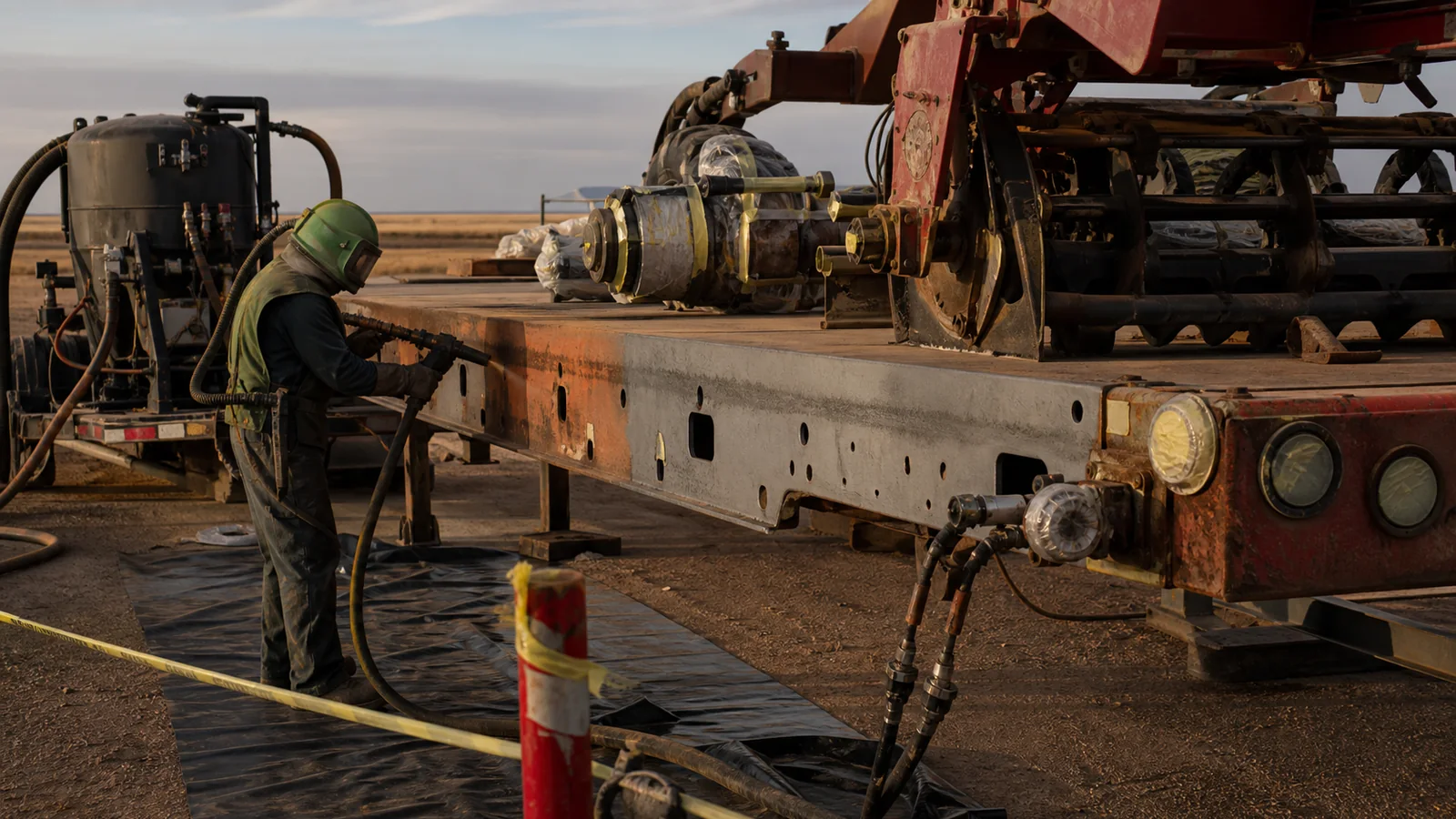
A trailer taken out of service is not just a maintenance item; it is capacity that cannot make a run. Surface preparation therefore has to be planned as part of the fleet’s maintenance sequence, not treated as an isolated blasting appointment. The most productive program gives operations a reliable release plan and gives repair and coating crews a surface they can accept.
Manases EcoBlast performs mobile wet abrasive blasting and surface preparation for commercial fleets and contractors across Kansas, Oklahoma, and Texas, operating from Great Bend and Austin. Mobile service can remove transport to a distant blasting location from the schedule, but the yard, asset, and downstream work still need deliberate coordination.
Decide what each trailer actually needs
A uniform scope across every unit may be easy to purchase but inefficient to execute. Separate units by condition and intended outcome. One group may need localized rust and coating removal around crossmembers, landing gear, or repair areas. Another may require broader preparation for a complete coating system. Sound coating that will remain needs a different transition treatment than coating scheduled for complete removal.
Start with a unit list that records trailer type, dimensions, asset number, current location, corrosion zones, known coating system, and required return-to-service date. Note special configurations such as liftgates, refrigeration equipment, air and electrical lines, wood decks, reflective tape, decals, conspicuity markings, and enclosed cavities.
Blasting can expose corrosion, cracks, previous patches, and deteriorated welds, but it does not determine whether a trailer is roadworthy. Qualified fleet, repair, and inspection personnel should make those decisions after the relevant areas are visible.
Define a coating-ready handoff
“Ready for paint” can mean very different things to an abrasive-blasting crew and a coating applicator. Before work begins, identify the controlling coating specification and the required level of preparation. Clarify whether the scope includes complete coating removal, spot preparation, feathered transitions, or cleaning of designated repair zones only.
The coating party should confirm its requirements for surface cleanliness, anchor profile, remaining tightly bonded coating, soluble contaminants, moisture, and maximum time before primer. Specify who will inspect, what reference or instrument will be used if applicable, and how rejected or inaccessible areas will be handled.
Wet abrasive blasting reduces airborne dust compared with dry blasting, but it can leave moisture on the asset and is not dust-free. Carbon steel can develop flash rust. Weather, steel temperature, drainage, and the selected coating system all affect the handoff window. Breaking a large trailer into sections may help the painter follow closely, but only if the overlap and acceptance plan is clear.
Build downtime from the full maintenance chain
Blasting duration is only one part of out-of-service time. A realistic plan may include arrival and check-in, unloading, washing or degreasing, removal of accessories, masking, preparation, inspection, structural repair, final touch-up, drying, coating application, cure, reassembly, regulatory inspection, and release.
Map those dependencies backward from the date operations needs the unit. Confirm that welders, inspectors, paint materials, application equipment, and a suitable coating location will be available. If a hidden defect is uncovered, establish who can authorize expanded repair and whether the next fleet unit should pause.
Avoid promises based only on square footage. Undercarriages, rivets, crossmembers, suspension geometry, heavy coating buildup, and deep corrosion slow access. A representative test area on the first unit can establish a more credible production range and reveal whether the assumed coating system and rust condition match reality.
Stage mobile work for steady fleet flow
A good mobile layout separates three zones: units waiting for service, the controlled preparation area, and completed units awaiting inspection or the next trade. Service vehicles need firm access and room to operate. Hose paths should not cross active traffic where they can be avoided, and the work zone should be separated from drivers, mechanics, and visitors.
Use visible asset numbers and a daily release board. The fleet contact should verify that each unit is empty, safe to work on, and properly immobilized. Identify who controls keys and whether tractors, dollies, or yard trucks will be available when a trailer must move.
Batching similar units often improves continuity because masking, access, and acceptance remain consistent. However, releasing units in smaller groups can protect fleet capacity and keep the coating crew supplied without creating a backlog of exposed steel. The best batch size is the one the entire repair-and-coating chain can finish—not simply the number that can fit in the yard.
Protect components, neighbors, and drainage
Before preparation, identify surfaces that must not be blasted: air lines, brake components, electrical connectors, bearings, seals, hydraulic rods, lights, cameras, identification plates, glass, polished components, and sensitive refrigeration hardware. Determine whether removal or robust masking is more reliable. Manases EcoBlast and the fleet team should agree on responsibility for disassembly and reassembly.
The site plan should address rebound, mist, spent abrasive, runoff, wind, storm drains, nearby vehicles, open shop doors, air intakes, and adjacent businesses. Containment and recovery methods depend on the coating, substrate, site, and applicable requirements. Older or unknown coatings may require testing and a revised disturbance and waste plan before work starts.
Wet methods help suppress airborne dust at the nozzle; they do not remove the need for exclusion zones, PPE, housekeeping, or environmental controls. Schedule the work when nearby operations can support the necessary separation.
Use a pilot unit to reduce program risk
For a multi-unit program, choose a pilot that represents the fleet rather than the cleanest trailer available. Record its starting condition with photos, mark test areas, and have the repair and coating decision-makers present for acceptance. The pilot can resolve masking details, preparation boundaries, profile expectations, inspection timing, cleanup, and coating consumption assumptions.
After the pilot, hold a short review. What remained inaccessible? Which components should be removed earlier? Did the coating crew keep pace? Were drains and recovery controls adequate? Update the work package before committing the rest of the fleet. A repeatable checklist is more valuable than an optimistic production promise.
Frequently asked questions
Can trailers remain loaded during surface preparation?
Usually, unloading is the safer planning assumption. Cargo can affect access, weight, contamination risk, and the ability to move or immobilize the unit. Confirm site-specific requirements before scheduling.
Is mobile blasting always faster than hauling trailers off-site?
It can remove transport steps, but total downtime still depends on cleaning, repair, inspection, coating, cure, and reassembly. Compare the complete maintenance chain.
Can you prepare only rusted areas?
Yes, when the repair and coating specification supports spot preparation. Boundaries and transitions should be agreed with the coating applicator in advance.
How should a fleet request be documented?
Provide an asset list, photos, trailer types and sizes, desired preparation outcome, site restrictions, and required release dates. Flag unknown coatings and sensitive equipment.
Plan a workable release schedule
Send Manases EcoBlast photos or fleet plans, the yard ZIP code, trailer sizes and quantity, and your preferred timeline. Include the coating specification, repair sequence, and daily or weekly release target if available. Call 512-592-1288 or email contact@manasesecoblast.com to discuss mobile surface preparation in Kansas, Oklahoma, or Texas.
Suggested next reads: