
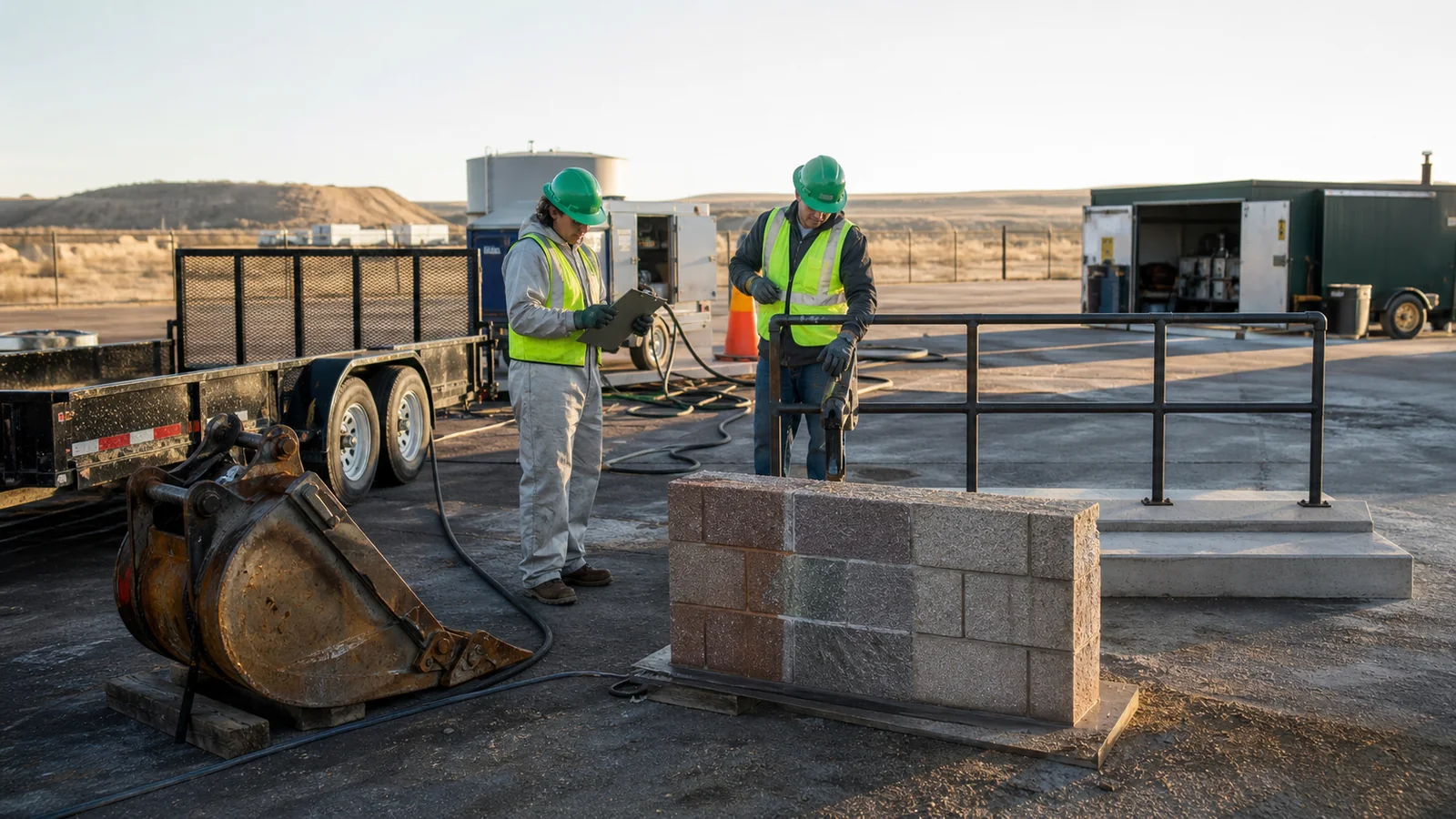
Wet abrasive blasting—often marketed as “dustless blasting”—can remove paint, rust, powder coating, and stubborn buildup while preparing many surfaces for their next finish. Its value is versatility: an operator can adjust abrasive type and size, pressure, water flow, nozzle distance, angle, and movement to suit the material and objective. Water suppresses much of the airborne dust associated with dry abrasive blasting and can improve visibility at the work area, but the process is not dust-free.
That flexibility makes wet abrasive blasting useful across automotive, residential, and industrial work. It does not make every surface an automatic candidate. Thin metal, delicate masonry, glass, natural stone, unknown coatings, and mixed-material assemblies need careful evaluation. A representative test patch helps confirm removal rate, surface appearance, and whether the planned method is appropriate before production begins.
Why Wet Abrasive Blasting Fits Many Projects
The process combines three controllable elements. Abrasive particles do the cutting and removal. Water captures a portion of the particles released at impact, helping reduce airborne dust. Equipment settings and operator technique determine how those forces reach the substrate.
That last element matters most. Effective preparation is not a matter of “blasting harder.” An aggressive abrasive or long dwell time might remove a thick coating quickly but also create excessive profile, round an edge, expose aggregate, or distort thin sheet. A lighter setup may preserve the substrate but fail to remove a resilient coating efficiently. The target finish, not the equipment’s maximum output, should guide the setup.
Wet blasting also changes jobsite planning. Spent abrasive, water, and removed coating collect as damp debris that must be contained and recovered. Screens, ground covers, drain protection, masking, and exclusion zones may still be needed. If a coating could contain lead, chromium, or another hazardous constituent, it should be tested as appropriate, and the work requires controls and disposal practices based on the results. Water does not neutralize hazardous material.
Automotive and Restoration Uses
Automotive applications can include frames, wheels, heavy-gauge parts, implements, and some body panels. Typical goals are removing rust, old paint, primer, or powder coating before repair or refinishing. Blasting can reach welds, corners, and irregular shapes that are slow to address with hand tools.
Vehicle work also illustrates why tuning and testing are essential. Large, flat body panels can warp or show unwanted texture if heat, impact, pressure, media, or technique is unsuitable. Aluminum, fiberglass, chrome, glass, seals, bearings, wiring, and machined surfaces have different vulnerabilities. Parts that should not be blasted need removal or secure protection, and a test area should be evaluated before proceeding across a visible panel.
The desired handoff should be established in advance. If bare carbon steel will be exposed, the owner, body shop, or painter needs a plan for drying, cleaning, inspection, and timely priming. Wet-blasted steel can develop flash rust, particularly in humid conditions. Any inhibitor must be compatible with the selected coating system rather than added by assumption.
Residential and Property Applications
Around homes and managed properties, controlled blasting may help remove coatings or buildup from suitable concrete, brick, masonry, metal fencing, gates, railings, and other exterior features. It can also support restoration of compatible wood, though wood species, grain, age, moisture, and desired appearance significantly affect the outcome.
The substrate should be identified before choosing a method. Hard fired brick can behave differently from soft historic brick. Sound concrete differs from weak or spalled concrete. Natural stone, decorative finishes, mortar joints, and previously repaired areas may respond unevenly. Even when the underlying material is blast-compatible, the result may include a changed texture or exposed aggregate. An approved sample area sets realistic expectations.
Residential work requires attention to neighbors and adjacent finishes. Windows, vehicles, landscaping, electrical fixtures, air intakes, pools, painted trim, and finished paving may need protection. Water and debris must be kept out of storm drains and contained according to site and local requirements. Reduced airborne dust can make wet blasting practical in some outdoor settings, but it does not eliminate rebound, mist, noise, or cleanup.
Industrial, Fleet, and Equipment Uses
Industrial and commercial uses include preparing trailers, fleet components, structural steel, tanks, machinery housings, and heavy equipment for repair or recoating. Blasting can remove failed coatings and corrosion while producing an anchor profile when the abrasive and operating range are selected for that purpose. Complex geometry—edges, welds, brackets, and corners—is often where a controlled nozzle process is particularly useful.
The coating specification should define the required level of cleanliness and profile. A surface can look clean yet retain contamination or have a profile outside the coating manufacturer’s range. Inspection may require visual standards, profile measurements, or soluble-salt testing. Deep corrosion pits can remain visible after removable rust is gone; blasting does not replace metal-loss assessment or structural repair.
Operating facilities add constraints. Crews may need to isolate work from employees, production, sensitive instrumentation, air intakes, traffic, and energized equipment. Unknown coatings warrant investigation before disturbance. The scope should assign responsibility for access, containment, sampling, waste characterization, cleanup, acceptance, and the coating handoff.
What to Expect From the Project Workflow
Although every job differs, a professional workflow usually follows a consistent sequence:
1. Define the objective. Identify what must be removed, the substrate beneath it, and the finish or coating that follows. 2. Review the site. Note access, utilities, drains, weather exposure, nearby property, sensitive components, and work-hour limits. 3. Identify coating hazards. Review records and arrange testing when age, use, or condition suggests regulated material may be present. 4. Protect and contain. Mask excluded areas, establish a controlled work zone, and plan collection of water, abrasive, and coating debris. 5. Test and tune. Use a representative patch to evaluate abrasive, pressure, water ratio, nozzle angle, distance, and technique. 6. Remove and inspect. Work systematically through broad surfaces, edges, welds, corners, and problem areas, checking against the agreed result. 7. Clean and hand off. Recover residue, inspect the prepared surface, and coordinate drying, repair, priming, or other next steps.
Weather can affect several stages. Wind changes containment needs; heat and humidity affect drying; rain can interrupt exterior preparation. Scheduling should protect the accepted surface rather than leave it exposed while another trade or a storm introduces contamination.
How to Decide Whether It Is the Right Method
Start with the material and required endpoint, not the phrase “dustless blasting.” Compare wet abrasive blasting with sanding, grinding, chemical stripping, pressure washing, dry blasting, or specialty cleaning based on the complete workflow. A method that removes material quickly may not be the best choice if it cannot produce the required profile or creates unacceptable risk to adjacent surfaces.
Use this checklist during an initial review:
- What is the substrate, and how thick or sound is it?
- What coating, rust, scale, or buildup must be removed?
- Is hazardous-material testing needed before disturbance?
- Must sound coating remain, or is full removal required?
- What surface profile or visual finish will be accepted?
- Which parts, openings, drains, and finishes need protection?
- How will wet debris and runoff be collected and handled?
- Who will inspect the surface and apply the next coating?
When the material or finish is uncertain, a test patch provides better evidence than a blanket promise. Results can vary across repairs, corrosion levels, coating thicknesses, and mixed substrates, so the project scope should allow appropriate adjustments.
Frequently Asked Questions
Is dustless blasting actually dust-free?
No. Adding water substantially reduces airborne dust compared with many dry-blasting setups, but mist, fine particles, rebound, and debris remain possible. The site may still require containment, PPE, drain protection, and separation from people or sensitive property.
Can wet abrasive blasting be used on any surface?
No single process suits every substrate. Suitability depends on material, condition, coating, required finish, and operating settings. Thin sheet, soft masonry, wood, natural stone, composites, and decorative finishes deserve particular caution and a representative test patch.
Does blasting leave a surface ready to paint?
It can produce the required cleanliness and anchor profile, but “ready” also depends on inspection, contaminant limits, dryness, environmental conditions, and the coating specification. Bare steel should be dried and primed within the approved window to control flash rust and recontamination.
What information helps produce a useful estimate?
Send three to five clear photos, including wide views and close-ups; approximate dimensions or square footage; the substrate; what should be removed; the desired finish; location; access notes; and timeline. Include coating records, specifications, or test results when available.
Send Your Project Information
Manases EcoBlast provides mobile surface preparation from Great Bend, Kansas, and Austin, Texas, serving projects across Kansas, Oklahoma, and Texas. For an initial method review, send photos, dimensions, project location, removal objective, intended finish, and schedule to contact@manasesecoblast.com. You can also call 512-592-1288. The team can review the substrate, jobsite controls, test-patch needs, and coating handoff before recommending a practical next step.